Trip Grade
Moderate

Duration
7 Days

Daily Activity
4-7 hours

Country
Nepal

Season
Spring/autonm

Group Size
2-10 Pax

Max Altitude
4065m

Transportation
Private vehicle / Plane

ACCOMMODATION
Tea Houses

Trip Type
Trekking
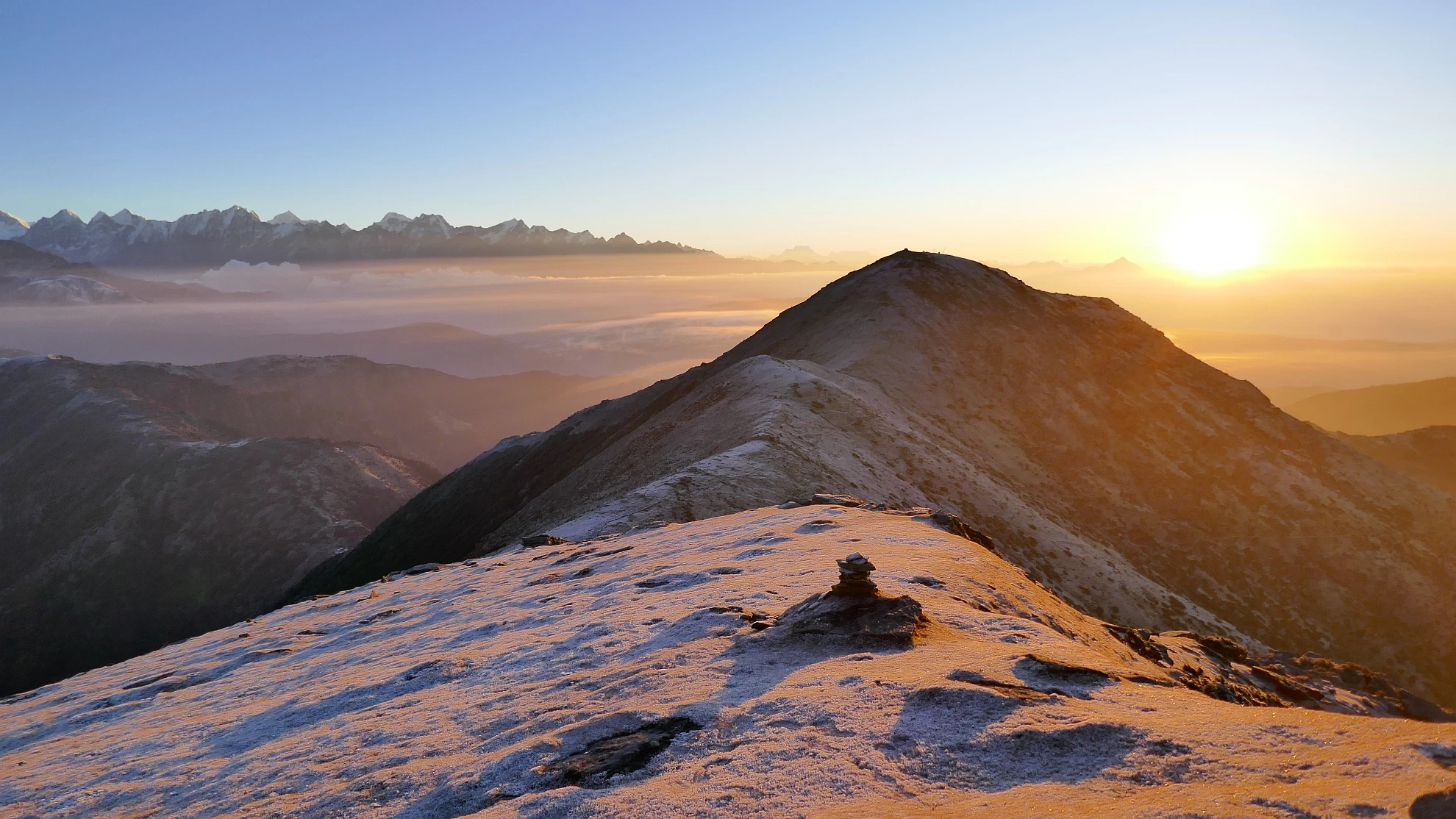
Most people think a view of Everest takes two weeks, a flight to Lukla and a crowded trail. Pikey Peak shows otherwise. In the hills of Solukhumbu, a newer route climbs to 4,065 m (13,337 ft) and opens onto a Himalayan panorama with Everest at its center. The sunrise here is often said to be among the finest in Nepal. Sir Edmund Hillary reportedly called it one of the best mountain views he had ever seen.
This 7-8-day itinerary takes the unhurried route. You drive in by road, walk through rhododendron forest and alpine meadow, and spend your evenings in village homes and lodges. You stay with Sherpa, Rai, Tamang, Limbu and Chhetri families whose traditions are still very much alive. The trail is quiet, the people are welcoming, and the mountains are close.
1. Sunrise over Everest from the summit
Reach the top before dawn and watch the first light turn Everest, Lhotse, Makalu and Kanchenjunga gold, then pink. It is the moment the whole trek builds toward.
2. A 360° panorama of giants
From one ridge you can see Everest, Lhotse, Nuptse, Ama Dablam, Thamserku, Makalu, Kanchenjunga, Gaurishankar, Numbur, Shishapangma and Mera Peak. Several of them are over 8,000 m.
3. A living cultural journey
Walk past ancient monasteries, mani walls, stupas, prayer wheels and fluttering prayer flags. Meet communities with distinct languages, festivals, foods and customs. Pikey is said to mean “Deity of the Sky” in the Sherpa language, and the mountain is sacred to the people here.
4. Wild, untouched trails
The route runs through the Gaurishankar Conservation Area. Rhododendron and pine forest gives way to open highland meadows, with rivers, waterfalls and valleys along the way. It stays calm and uncrowded, unlike the busier Khumbu trails.
5. Everest views without the Lukla flight
A road connection to Solukhumbu means you can reach the trailhead overland. It costs less, avoids flight delays and weather cancellations, and suits those uneasy about flying.
Fly (Kathmandu to Phaplu) The best choice if you have limited time or want extra comfort. The flight is much faster than the road, though flights are limited, so book early, and bad weather can sometimes cause delays. You can fly to Phaplu, fly back from Phaplu, or do both, depending on when you start and end the trek and which flights are available.
Drive (jeep) A great fit if you enjoy scenery and have a moderate budget. The journey takes about 7 hours and is comfortable and flexible, with plenty of chances to stop and take in the hills.
The roads are rough and services are limited along the way, so driving is more of an adventure than a smooth ride. Travel time is similar by private or public transport, so the real difference is comfort.
Spring (March–May): Rhododendrons bloom across the hillsides.
Autumn (September–November): Crisp, clear skies and the best visibility.
Winter (December–February): Cold but dramatically clear, with the fewest crowds.
There is no single way to reach the summit. The lower Everest region has several trekking routes and local trails that lead to Pikey Peak, and most trips from Kathmandu and back run five to seven days. This 8-day plan includes a buffer day, but it can be shortened or stretched to match your schedule.
Tell us how many days you have, and we will design a custom itinerary around your time, pace and interests. If you want to compare options, check out the Pikey Panggom Trek by Adventure Sherpa Tracks, a loop trip with the same Everest views.
Pikey Peak is the kind of trek that stays with you for its people as much as its peaks. You come for the Everest sunrise, and you leave with memories of shared meals, monastery bells and the warm hospitality of villages that few travellers have seen. If you have a week and a sense of adventure, this is the Everest-region trek to choose.
Trip Highlight
DAY
1
After landing at the Tribhuvan International Airport in Kathmandu and completing your custom formalities pick up your luggage and look for representative of Adventure Sherpa Tracks who who will be with display board at the arrival gate. You will be greeted by our representative and he/she will pick you and transfer to your hotel. Then check-in at the hotel, freshen up and take a rest. In evening or noon , you are introduced to your fellow participants ,guides and discuss about our trip at Hotel where you stay.
DAY
2
After breakfast, your Adventure Sherpa Treks tour guide will pick you up from the hotel for a full-day sightseeing tour around Kathmandu. You will visit these World Heritage Sites: Durbar Square: Sheds light on the life of the royals in ancient times. Pashupatinath Temple: One of the most important pilgrimage sites for Hindus. Swayambhunath Stupa: Also known as the Monkey Temple. Boudhanath Stupa: One of the largest stupas in the world. Depending on your preferences, other sites such as Bhaktapur may also be included. In the evening, you will return to the hotel to prepare for the trek. This day is reserved as a buffer in case of any unexpected delays. If there are none, you can spend the day as you please in Kathmandu. It is a relaxed day for resting, shopping around Kathmandu, and finishing your final preparations for the trek.
DAY
3
Your Pikey Peak adventure begins with a full day of scenic driving from the busy Kathmandu Valley into the quiet hills of lower Solukhumbu. We leave the city on a local bus and join the paved Araniko Highway, passing through the old towns of Bhaktapur, Banepa and Dhulikhel. Near Dhulikhel we turn onto the Pushpalal (BP) Highway toward Okhaldhunga, and the road descends to the Sun Koshi River, where you may spot rafters riding the rapids. From there we wind through terraced hills and farming villages, follow the Tama Koshi and pass through Ghurmi before climbing to the hill town of Okhaldhunga.
From Okhaldhunga we take the Okhaldhunga-Solukhumbu road through forests of rhododendron and pine. The final three hours or so are on a rough dirt track that brings us to Dhap, a Sherpa settlement with views toward Kanchenjunga, Everest and Mera Peak. Some groups continue to Jhapre the same day, but we stay overnight in Dhap. The drive is long, and sleeping at 2,920 m (9,580 ft) gives your body a gentle start to acclimatization. You will stay in a tea house with dinner included.
DAY
4
Today is your first day on foot, and we keep the pace slow and relaxed so your body can adjust to the altitude. The trail leaves Dhap on soft, sandy ground through thickets of rhododendron and reaches Sigane Village, where Everest and Numbur Peak appear in the distance. Beyond Sigane the path climbs steadily through forests of oak, fir and rhododendron, passing several small waterfalls that make a good spot to rest and cool your feet.
As you approach Jhapre you will pass chortens, whitewashed stupas and long mani walls, signs of the strong Buddhist culture of the region. The village has a small monastery, and after lunch and a rest you can visit it and wander through the village. The walk covers about 13 km, and you will spend the night in a tea house .Drink plenty of water and take your time. Today is about acclimatizing, not covering ground quickly.
DAY
5
Today you climb above the forest, and the scenery changes from woodland to open alpine country. From Jhapre the trail follows the slope of the Bhulbhule ridge, a good place to stop for a cup of hot tea and enjoy the first big views of Everest. Shortly after Bhulbhule the path forks. We take the right branch and climb a steeper forest track up to Lhamuje.
As we gain height the trees thin out and give way to wide alpine pastures. Along the way we cross the Ramdin and Taklung dandas (ridges), and on clear days the views of the surrounding hills and Himalayan peaks are excellent. From Lhamuje we continue across the meadows to Pikey Base Camp. The day covers about 15 km
DAY
6
Pikey Base Camp → Pikey Peak (Summit) → Taktor
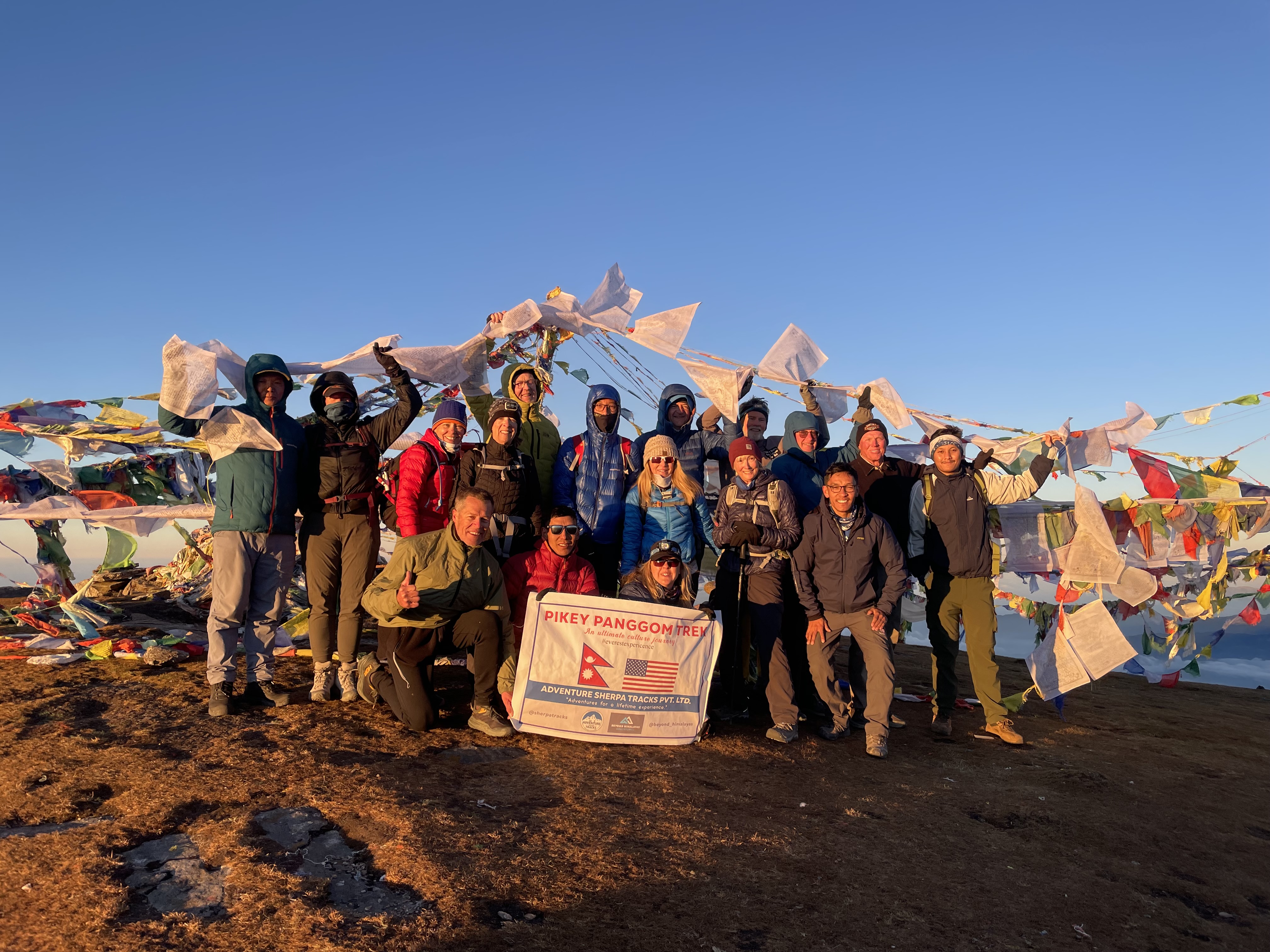
Wake up before dawn, have a hot cup of tea or coffee, and begin the short climb from Pikey Base Camp to the summit of Pikey Peak (4,065 m / 13,336 ft), one of Nepal’s finest viewpoints. Carry a headlamp, warm layers, gloves, and a hat, as it is cold and windy before sunrise. From the top, you are rewarded with an extraordinary sunrise panorama of Everest, Lhotse, Makalu, Kanchenjunga, Dhaulagiri, Annapurna, and many other Himalayan peaks. Take your time to enjoy the view and the prayer flags at the summit. After the sunrise, you will have breakfast at Pikey Peak to gain energy for the day ahead. You do not return to Pikey Base Camp. Instead, you continue along a scenic ridgeline towards Byanjang, passing through open meadows, rhododendron and juniper forests, and traditional Sherpa settlements with changing views of the Himalayas. From Byanjang, you continue the descent to Taktor (3,030 m), a quiet and peaceful village where you will spend the night in a local teahouse and enjoy a warm dinner of dal bhat. The trek takes around 5 to 6 hours and covers approximately 12 km. Depending on your time, energy, and personal choice, you can also trek further to Junbesi, a larger town with more lodges, better facilities, and a well-known Sherpa monastery. This is entirely optional, and staying overnight in Taktor is a perfectly good choice if you prefer a slower pace.
DAY
7
Today’s walk takes you down from the high country into the Sherpa heartland. The trail leaves Taktor and descends through moss-draped forest and quiet meadows, with the air getting warmer and thicker as you lose height. After about 12 km you reach Junbesi, one of the most attractive villages on the route, known for its stone-built houses, its monasteries and the friendly welcome of its Sherpa families. You will spend the night in a tea house here The monastery visit is the cultural highlight of the day, and the timing depends on where you are. If you are already in Junbesi, you can visit after breakfast. If you are walking in from Taktor, you can go after lunch, in the late afternoon, and return to your lodge for the evening. From the village, the path follows the calm waters of the Junbesi Khola, passes old stone tombs and crosses a sturdy suspension bridge. A short, steep climb through forest and farmland then brings you to Thupten Choling Monastery, founded around the 19th century by Kyabje Trulshik Rinpoche. The monastery sits at 2,920 m (9,580 ft), and its courtyard looks out toward the peaks of the Numbur Himal. Inside, the prayer halls hold brightly painted thangkas, detailed wall murals and statues of the Buddha. The monastery is home to around 900 monks and nuns, many of them Tibetan refugees, and the atmosphere is calm and welcoming. With some luck you may also see a puja ceremony. Afterward, you walk back down to Junbesi for dinner and a restful night.
DAY
8
Today is the last full day of walking on the Pikey Peak trek, and it is a gentle, rewarding one. From Junbesi the trail descends gradually through forests of pine and rhododendron, passing Sherpa and Rai villages, terraced farmland and several suspension bridges. Along the way you will pass local monasteries and enjoy peaceful valley scenery with Himalayan peaks in the distance. After about 16 km you arrive in Phaplu, the administrative center of the Solu region. Please note that the trail is not quite what it was in the past. Road access and new jeep tracks now cross parts of the route, so you will occasionally share the path with a passing jeep. These stretches are short, and most of the day is still spent on quiet forest paths and village trails. You will spend the night in a tea house in Phaplu, with breakfast, lunch and dinner included. If you arrive with energy to spare, the evening is free for optional side trips. You can take a short ride to Salleri, the district headquarters of Solukhumbu, to see the local market and town life, or visit Chiwong Monastery, a peaceful hillside monastery in the area. Both are optional, and you can also simply relax at your lodge after the long walk.
DAY
9
Today the Pikey Peak trek comes to an end. After breakfast in Phaplu we begin the journey back to the capital, retracing the route from Day 1 along the Okhaldhunga road. The winding mountain road passes through green countryside and follows the Sun Koshi River before joining the Pushpalal Highway, which leads us toward the Araniko Highway. Before reaching Kathmandu we pass through the lively towns of Dhulikhel, Banepa and Bhaktapur once more. The drive takes about 8 to 10 hours, and once we are settled into our hotel in the capital, the evening is free for a celebration of the trek. The standard return is by road on a local jeep. For your comfort, a private jeep transfer is provided . You can also skip most of the long road journey with a short domestic flight from Phaplu to Kathmandu, also at extra cost. Flights depend on schedules and weather, and operations from Phaplu are limited, so this option should be requested and confirmed at the time of booking. This marks the end of the Pikey Peak trek.
DAY
10
The main emphasis while trekking is on keeping warm and dry while still being lightweight. You should bring a rucksack or backpack for the gear required during the day. Your pack should contain items such as warm clothes, a jacket, a camera, water bottles, a personal first aid kit, and snacks. The weight limit is 5kg. A porter will carry the rest of your personal equipment packed in a duffel or kit bag. The weight limit for your duffel bag is 15 kg however it is different in the case of peak climbing and expedition.
A Note on Packing
For your international flights, we recommend that you pack all your equipment in your two duffle bags or suitcase. Do not simply pack your backpack (since the straps can be damaged by the baggage handling machines). It is important to lock these bags for their trip. Depending on the airport, you may be able to put your travel locks on after TSA has searched the bags. If not, Lock the bags with Zip Ties. If the TSA cuts off the zip-tie to search your bag, they will replace it. You will still need the travel locks to lock your bags in the hotel and during the trek. Generally, you will take one duffel on the trek , and leave one in the hotel in Kathmandu with your belongings for your time in the city. Your trek in duffel will only be accessible in the evenings (with items such as changes of clothing, sleeping bag), and your day pack will hold vitals such as water, layering, blister kit, and camera.
FOOTWEAR